
World Cup 2026 Betting — Odds, Tips and Insider Picks
 Available in US
Forty-eight teams. A hundred and four matches spread across three countries. The 2026 World Cup is not just another tournament — it is a completely different animal, and the betting markets have not fully caught up. I have spent nine years dissecting international tournament odds, and the gap between what bookmakers price and what actually happens is wider right now than at any point since Russia 2018. This is your edge, broken down group by group, market by market, with the picks I would put my own money behind before 11 June.
Your Pre-Tournament Briefing in 30 Seconds
- The expanded 48-team format creates 12 groups of four and a round of 32 — that means eight third-placed sides qualify, inflating group-stage value bets in ways most punters have not priced in.
- Outright markets have compressed around five or six favourites, leaving genuine mispricing on sides like Colombia, Japan and the USA as co-hosts — all of which trade wider than their underlying strength warrants.
- Ireland did not qualify after a penalty shootout exit against Czechia, but culturally close sides Scotland (Group C) and England (Group L) give Irish punters a rooting interest worth analysing.
- Late kick-off times from the US (many matches at 23:00 IST or later) reshape live-betting patterns — the in-play markets after midnight will be thinner and more volatile, which is an edge for anyone still awake.
- Ante-post bets placed now lock in value that will evaporate once squad announcements land in late May — the window for early tournament punts is closing fast.
What the 48-Team Format Actually Changes for Punters

















I sat in a Dublin pub during the 2022 quarter-finals and watched a friend tear up an accumulator that died because Morocco — a side nobody had on their slip — knocked out Spain on penalties. That kind of chaos is about to multiply. The 2026 World Cup in the United States, Mexico and Canada is the first to feature 48 teams, which means 12 groups of four, 104 matches across 39 days, and a knockout bracket that starts with a round of 32 instead of a round of 16. For anyone placing World Cup 2026 betting slips, every single assumption about tournament structure needs recalibrating.
The biggest structural shift is the third-place qualification rule. In a 32-team World Cup, finishing third in your group meant elimination. Now, the top two from each group go through automatically — 24 sides — and then the eight best third-placed teams join them in the round of 32. That is 32 out of 48, or two-thirds of the field progressing. For group-stage betting, this changes the maths completely. A side that loses its opening match is no longer in a crisis — it is still, statistically, more likely to qualify than not.
What "best third-placed" means in practice: FIFA ranks the twelve third-placed teams across all groups by points, then goal difference, then goals scored. The top eight advance. In simulation models, a third-placed team with four points (one win, one draw, one loss) qualifies roughly 95% of the time. Even three points (one win, two losses) gets through in most scenarios.
For outright and group winner markets, the format change cuts both ways. Favourites face more matches before the final — seven instead of six — which increases fatigue and the probability of a shock result. But the expanded bracket also means that a group-stage stumble is less likely to be fatal. A side like France or Brazil can afford to rotate in the group stage, take a loss, finish third, and still have a viable path to the final. This is something bookmakers have partly accounted for in outright pricing, but the group-stage markets — which are where I find the most consistent value at any World Cup — have not fully adjusted.
Consider what a 104-match schedule means for accumulator betting. The 2022 tournament had 64 matches. This one has 40 more. That is 40 additional results that can blow up your acca, but also 40 more opportunities to find value in match-by-match markets. The sheer volume of football creates inefficiency. Bookmakers set lines for all 104 matches at once, and by the third day of group play, the early prices on later fixtures will already look wrong because form and fitness data will have changed.
The 48-team format does not just add matches — it shifts the probability distribution of outcomes across every market. Group-stage qualification is easier, knockout paths are longer, and the volume of fixtures creates pricing inefficiency that rewards punters who are prepared to dig into the numbers before the opening whistle at Estadio Azteca on 11 June.
There is also a scheduling wrinkle that matters. Three host nations means three time zones — Mexico City (CDT, UTC-5), the US East Coast (EDT, UTC-4), and the US West Coast (PDT, UTC-7). Fixtures in Seattle or Los Angeles will kick off at times that translate to 01:00 or 02:00 IST. That is relevant for live betting, which I will get to later, but it also affects squad management. Teams playing late-night matches on the West Coast and then flying east for their next group game face a recovery disadvantage that will not show up in most pre-tournament models but will absolutely show up on the pitch.
Format understood — now let me show you where the money is actually sitting.
The Cut Line
Eight of the twelve third-placed sides go through. Set your team's group-stage finish and the model simulates the other eleven groups 12,000 times to price the one thing the market can't see yet: where the line falls.
Third tiebreak, after points and goal difference. It decides more ties than you would think.
Lopsided groups produce beaten-up third places elsewhere, which drags the line down and helps you.
| # | Third place | Pts | GD | GF |
|---|
Each run simulates the eleven other groups match by match — team strength drawn by seeding pot, goals drawn from a Poisson distribution — then ranks all twelve third-placed sides on points, goal difference and goals scored, exactly as FIFA does. Your side advances if it finishes in the top eight. Numbers are recalculated in your browser every time you move a control, so they will shift by a few tenths run to run. FIFA's deeper tiebreaks — fair-play points and, ultimately, drawing of lots — are not modelled. Estimates only, not a guarantee. 18+, please bet responsibly.
Outright Odds — Where the Smart Money Sits
A month ago, Brazil were trading at 9/2 across most Irish books. Today, after a strong set of friendlies, they have tightened to 4/1 in some places. That kind of drift — half a point of value vanishing in four weeks — is exactly why World Cup 2026 betting rewards early movers. The outright market is the headline market for any tournament, and right now it tells a clear story: five or six sides are clustered at the top, and everything below them is considered noise. I disagree with that framing.
Brazil, France and England sit in the top tier at prices between 4/1 and 6/1, depending on the book. Argentina, as defending champions, are typically around 5/1 to 11/2. Spain — reigning European champions — hover around 6/1 to 7/1. Germany round out the group at 8/1 to 10/1. These six consume the vast majority of the outright handle, and bookmakers are delighted because the margin is baked thickest into the favourites. The shorter the price, the bigger the overround the bookie banks.
Outright winner — typical fractional odds (Irish market):
Brazil 4/1 — France 9/2 — England 5/1 — Argentina 11/2 — Spain 13/2 — Germany 9/1 — Portugal 10/1 — Netherlands 16/1
Implied probabilities sum to roughly 130%, meaning a 30% overround. On single-match markets, the overround is usually tighter (5-8%). The outright market is where bookmakers make their biggest margin.
Here is where it gets interesting. Below the top tier, there is a cluster of sides priced between 16/1 and 33/1 — Portugal, Netherlands, Belgium, Croatia, the USA. These are not outsiders. Portugal topped the toughest qualifying group in Europe and have a roster as deep as anyone in the tournament. The Netherlands have a core of players peaking at the right time. The USA carry home advantage across 11 of the 16 venues. Yet because the market treats everything below 10/1 as an afterthought, the value in this band is genuinely underexplored.
I keep a spreadsheet of historical outright prices versus actual tournament outcomes, and the pattern is consistent: the eventual winner was priced between 4/1 and 8/1 in six of the last eight World Cups. The exceptions were Spain in 2010 (around 7/1 pre-tournament, but as short as 9/2 in some books) and Argentina in 2022 (roughly 11/2). In other words, the favourites do tend to win — but rarely at the very shortest price. The value is almost always in the second or third name on the list, not the first.
The last side to win the World Cup at odds longer than 10/1 was Italy in 2006, who were 12/1 in most pre-tournament markets. Every winner since then has been single figures.

For those digging deeper into the full odds breakdown by market type, there is a separate layer worth examining: group winner prices and top-scorer markets often carry less margin than the outright, because the volume of bets is lower and bookmakers spend less time refining those lines. A group winner bet at 8/11 might represent better expected value than an outright at 4/1, depending on the group composition.
My approach for this tournament is straightforward. I have my outright selection locked in — and I will detail it later in this piece. But I am putting roughly 40% of my tournament bankroll into group-stage markets and match-level bets, where the inefficiencies are largest, and only 20% into the outright. The remaining 40% stays liquid for in-play opportunities once the tournament starts. That split might sound conservative, but at a 104-match World Cup, the group stage alone is a goldmine if you know where to dig.
Group-by-Group Edge — Picks the Bookies Underrate
The draw for this World Cup fell in December, and within forty-eight hours the group winner markets were up across every Irish book. That is fast — too fast, in my experience. When bookmakers price twelve groups simultaneously, they rely on FIFA rankings, recent results and their own internal models. What they do not have time to do is granular analysis of every four-team combination. That is where the edge lives for someone willing to put in the work. I am not going to walk through all twelve groups here — you can find the detailed group-by-group breakdowns elsewhere on this site — but I will flag the four groups where I see the most significant mispricing.
Group C — Brazil, Morocco, Scotland, Haiti
The headline is Brazil as heavy favourites, and the market has them priced accordingly to win the group at around 4/7. Morocco, semi-finalists in 2022, are second favourites at roughly 3/1. Scotland are out around 8/1 to top the group and even money to qualify. Haiti, the tournament debutants, are massive outsiders. The mispricing here is Morocco. Their 2022 run was dismissed by some as a home-continent anomaly, but their qualifying campaign was dominant — they topped their CAF group without losing a match, and their squad has matured, with players now established at top European clubs. Morocco to win Group C at 3/1 is a bet I would take seriously. Brazil will rotate, Morocco will not.
Group D — USA, Paraguay, Australia, Turkey
The hosts are around 4/9 to top this group, and I understand why — home advantage is real, the crowd will be enormous, and the squad has improved. But 4/9 implies a 69% probability of finishing first, and I think that overestimates the certainty. Turkey came through the playoffs with a 1-0 win over Kosovo and carry genuine quality in midfield. Australia are experienced tournament campaigners who will not roll over. Paraguay are the weakest side, but even they are capable of taking points off one of the top two. The value here is Turkey to qualify at around 5/2 — not to win the group, just to get through, which is very achievable given the third-place route.
Group F — Netherlands, Japan, Sweden, Tunisia
This is the group the market thinks it has figured out: Netherlands first, Japan second, everyone else goes home. I see it differently. Japan's squad is the strongest they have ever sent to a World Cup — players at Bayern, Liverpool, Brighton, Real Sociedad — and their pressing style is built to cause problems for possession-heavy sides. Japan to top the group at around 3/1 is my favourite group-stage bet of the tournament. The Netherlands have quality but their defensive record in qualifying was patchy, and if Japan catch them on a bad night, the group could flip entirely.
Group L — England, Croatia, Ghana, Panama
England are the shortest-priced group favourite in the entire tournament at around 1/3, and the market is essentially saying: this group is a formality. Croatia are priced at 7/2 to win it, which is remarkable for a side that reached the 2018 final and the 2022 semi-final. Yes, they are aging. Yes, Luka Modric cannot do it alone forever. But Croatia's tournament pedigree is unmatched by any side outside the traditional big four, and 7/2 to top a group where England historically find a way to stumble is too generous. Croatia to qualify is around 4/6, which is closer to fair, but the group winner price has juice.
Insider take: Group-stage markets close roughly two hours before each group's first match. The best value is available now, in the ante-post window. Once the first ball is kicked at Estadio Azteca on 11 June, the odds on later groups will already have shifted based on results from earlier fixtures. Strike early.
Across the other eight groups, the general pattern holds: the favourite is correctly identified in most cases, but the second and third spots are where bookmakers show the widest gaps. Groups A, B, E and G all feature at least one side that I think the market is underrating by two to three points of implied probability. The full analysis is in the individual group pages, but the overarching thesis is this — in a format where two-thirds of the field advances, the qualification markets are systematically overpricing elimination risk for mid-tier teams.
Four groups stand out for mispriced value: Morocco in Group C, Turkey qualifying from Group D, Japan topping Group F, and Croatia's group winner odds in Group L. The expanded format and third-place rule make qualification bets the single most underpriced market at this World Cup.
Ireland Miss Out — Where Do Irish Punters Look Now?
The penalty miss in Prague on 26 March still stings. Ireland had fought their way through qualifying behind Portugal, earned a playoff spot, matched Czechia over 120 minutes at 2-2, and then lost the shootout 3-4. It was the closest the Boys in Green had come to a World Cup since 2002, and watching it slip away on penalties felt like a particularly cruel callback to the Saipan saga and everything that has gone wrong since. So the question for every Irish punter is straightforward: who do we back now?
The answer, for most of us, splits along two lines — one cultural, one practical.
The cultural pick is Scotland. The Celtic bond between Ireland and Scotland runs deeper than football — it is linguistic, historical, familial — but it finds its sharpest expression in the football context through Celtic FC and the shared experience of being smaller nations overshadowed by larger neighbours. Scotland are in Group C with Brazil, Morocco and Haiti. They are not going to win the group. But finishing third with a credible performance is well within reach, and in a 48-team format where eight third-placed sides advance, that is enough. Scotland to qualify from the group stage is priced at roughly even money, and I think there is value there.
The practical pick is England. Half of Ireland watches the Premier League every weekend. The players are familiar, the style is familiar, the soap opera of English tournament football — the hope, the hubris, the heartbreak — is something Irish viewers know intimately. England are in Group L with Croatia, Ghana and Panama, and they are one of the five or six genuine contenders for the title. Backing England as an Irish punter carries a certain irony, but the betting market does not care about historical grievances, and if you are looking for a side with a genuine chance of going deep, England's squad depth is hard to argue with.
Ireland's last World Cup appearance was in 2002, when Robbie Keane's last-minute equaliser against Germany sent pubs across the country into delirium. That squad reached the round of 16 before losing to Spain on penalties — another shootout, another heartbreak.
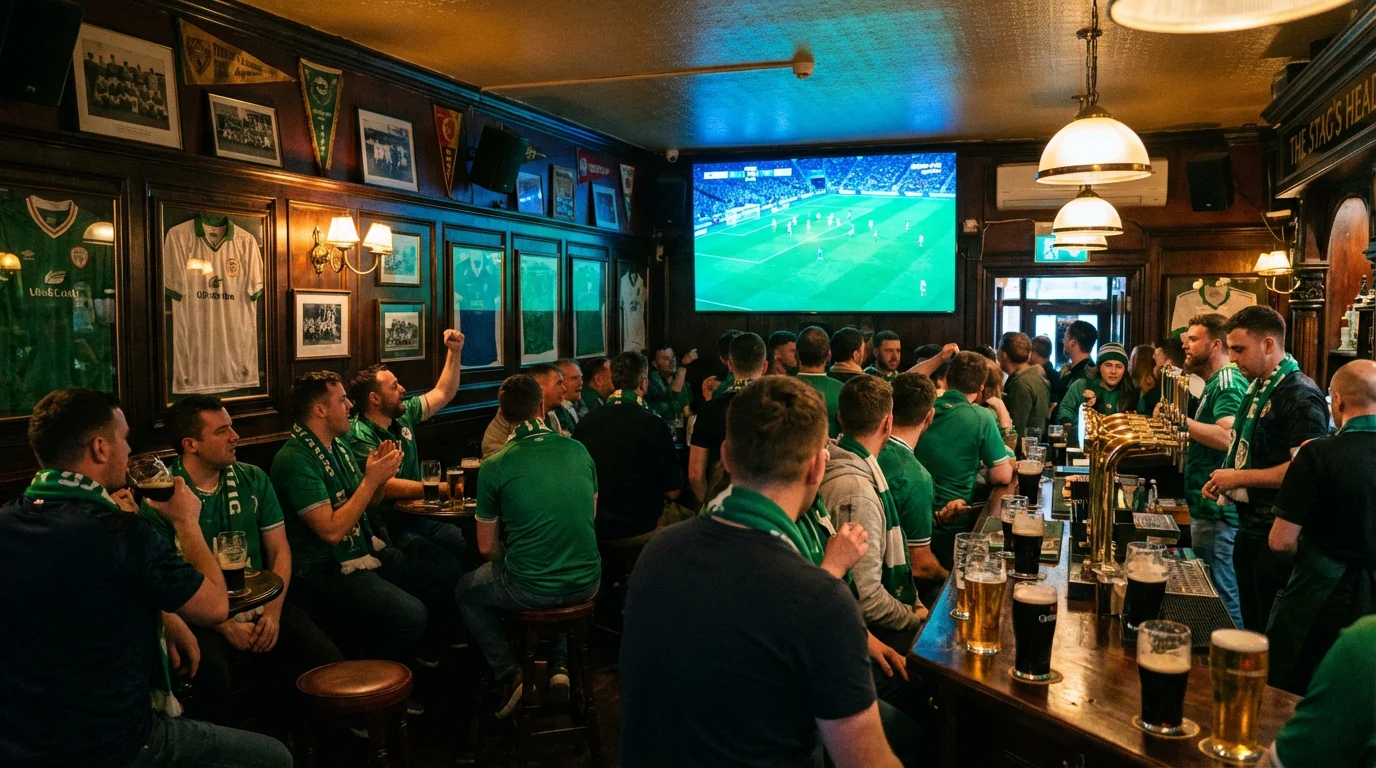
There is a third option that I think most Irish punters overlook: going fully neutral. Without a dog in the fight, you have no emotional bias distorting your analysis. That is an advantage. Some of my best tournament returns have come when I had no rooting interest, because I could evaluate every match on its merits without the little voice in my head saying "ah, go on, put a tenner on them to win." If you can set aside the tribal instinct and focus on the numbers, being a neutral at this World Cup is a genuine edge — particularly in the group-stage and match-level markets where emotional money tends to inflate the odds on popular sides and depress the value elsewhere.
Bet Types That Work at a World Cup
At the 2022 World Cup, roughly 70% of all bets placed through Irish-licensed bookmakers fell into just two categories: outright winner and match result. That leaves a vast landscape of markets where the money is thinner, the lines are softer, and the punter who does the homework has an actual informational edge. I am not suggesting you ignore the outright or match result — those are the bread and butter. But if the only bets on your slip are "Brazil to win the World Cup" and "England to beat Panama," you are competing against the sharpest money in the market with no advantage.
Here are the markets I focus on at a World Cup, in the order I prioritise them.
Group winner and group qualification. This is my single favourite market category for any tournament. Group winner bets close before the first match of that specific group, and the pricing is set weeks in advance. That means the odds reflect pre-tournament assumptions, not real-time form. By the time the group kicks off, you may already have a knowledge advantage from watching how other groups have played out. Group qualification bets — whether a team finishes in the top two or top three — are even softer, because the third-place rule makes qualification probabilities genuinely hard for bookmakers to model accurately.
Asian handicap on individual matches. The standard match result market (home-draw-away, or 1X2) carries a three-way overround that is always higher than the two-way overround on Asian handicaps. If you fancy a side to win a match, the Asian handicap line almost always offers better value. At a World Cup, where draws are more common in the group stage than in league football, the Asian handicap lets you buy insurance — backing a team at -0.5 goals instead of on the 1X2 line, or taking the +0.5 on an underdog to cover yourself against a draw. The betting glossary covers the full terminology for anyone new to these markets.
Asian handicap versus match result — a practical comparison
Suppose England play Croatia in Group L. The match result market might price England at 4/6, the draw at 12/5, and Croatia at 4/1. That 4/6 on England implies a 60% win probability.
The Asian handicap market might offer England -0.5 at 5/6, which also requires an England win but at better odds — the implied probability is 55%, not 60%. That 5% gap is the three-way overround being stripped out.
If England win 1-0, both bets pay. But the Asian handicap returned more per euro staked.
Over/under goals on a per-match basis. Tournament football tends to produce fewer goals than league football — the average in the 2022 group stage was 2.7 goals per match. But this tournament has 12 groups instead of 8, and more mismatches between strong and weak sides. Groups with a clear favourite and a debutant (Group C with Brazil and Haiti, Group E with Germany and Curaçao) are likely to produce at least one high-scoring match. Over 2.5 goals in Brazil versus Haiti is not a revolutionary pick, but the odds on it will be shorter than it should be because the market knows everyone is thinking the same thing. The smarter play is targeting matches where the total is harder to predict — say, Netherlands versus Japan — and taking the over or under based on tactical matchup rather than reputation.
Accumulators — with discipline. Accas are the market where bookmakers make their fattest margin, because punters stack too many legs and the cumulative probability of hitting a five-fold or six-fold is lower than most people intuitively grasp. At a 104-match World Cup, the temptation to build massive accas will be enormous. My rule is simple: never more than three legs, and every leg has to be a bet I would place as a single. If a selection is not strong enough to stand on its own, it does not belong in an accumulator.
Insider take: The specials and prop markets — tournament top scorer, number of red cards, which group produces the most goals — are entertainment bets with inflated margins. They are fun, and I place them myself for small stakes, but they are not where serious value lives. Treat them as the cost of enjoying the tournament, not as an investment strategy.
Late Kicks and Time Zones — An Irish Punter's Guide





Picture this: it is a Tuesday night in June, you are sitting in your local in Cork, and the match you want to bet on in-play kicks off at 01:00 IST. The pub is closed. You are on your phone, the live stream is lagging by 30 seconds, and the in-play odds are moving faster than you can react. This is the reality of the 2026 World Cup for anyone betting from Ireland, and it demands a different approach to live betting than what we are used to from European tournaments.
The tournament is spread across three time zones. Estadio Azteca in Mexico City sits in CDT (UTC-5), the US East Coast venues — MetLife, Hard Rock, Lincoln Financial Field, Gillette Stadium — are on EDT (UTC-4), and the West Coast stadiums — SoFi in Los Angeles, Lumen Field in Seattle, Levi's in Santa Clara — run on PDT (UTC-7). During summer, Ireland is on IST (UTC+1). That gives us a five-hour gap to the East Coast and an eight-hour gap to the West Coast.
Kick-off time translation for Irish punters: A 13:00 ET fixture starts at 18:00 IST — watchable after work. A 16:00 ET fixture begins at 21:00 IST — still manageable. But a 19:00 ET start means midnight IST, and a 21:00 ET or later kick-off in Los Angeles translates to 02:00 or 03:00 IST. The group stage will feature multiple slots per day, and the late-evening US games will push well past midnight Irish time.
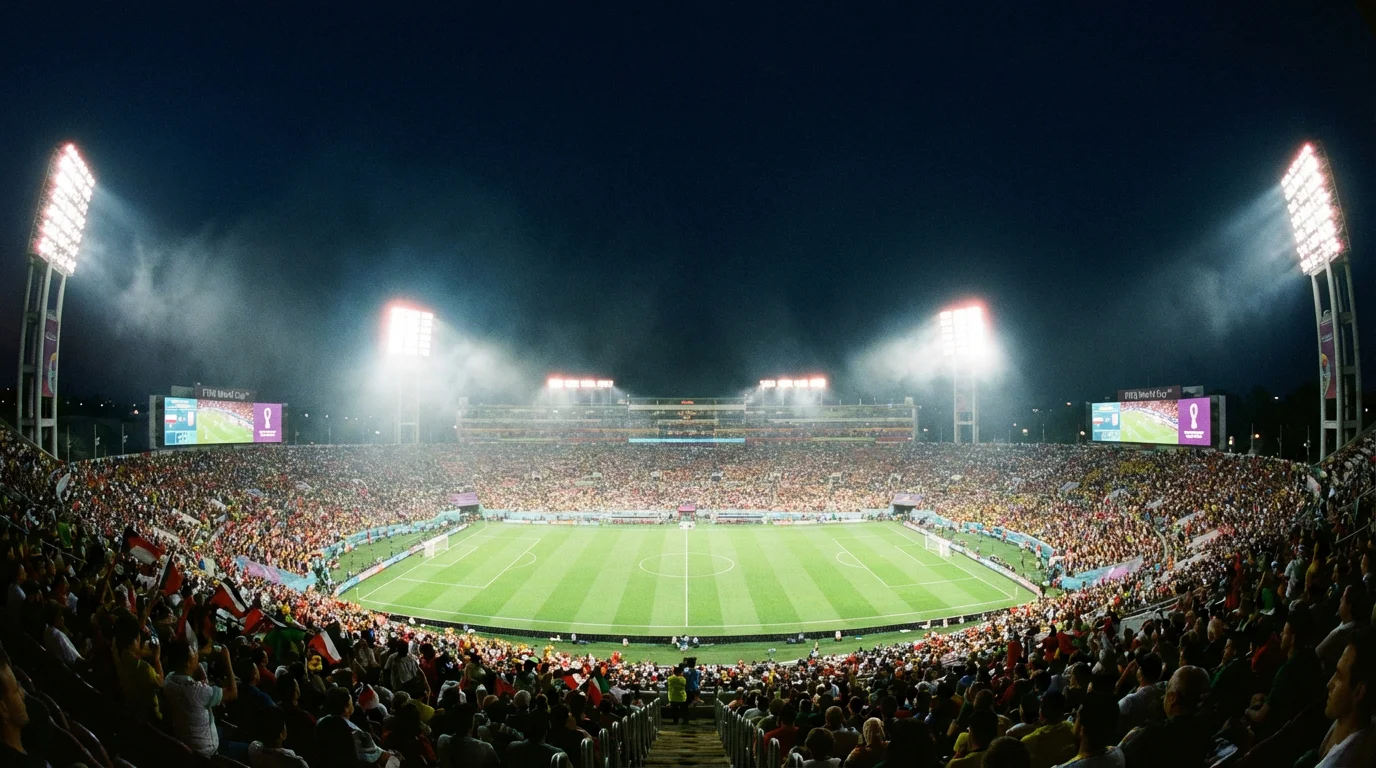
The betting implication is significant. Late-night matches in Ireland will have thinner in-play liquidity on Irish and UK-facing exchanges and bookmakers. When the majority of European punters are asleep, the in-play markets become dominated by American and Asian money, and the price movements follow different patterns. Lines adjust more slowly because the volume is lower. If you are one of the few Irish punters awake at 01:30 IST watching a Group D match in Houston, you may spot live-betting value that is not available during a standard 20:00 kick-off.
Venue conditions also matter for betting. Hard Rock Stadium in Miami will host matches in June and July heat — temperatures above 30 degrees Celsius with oppressive humidity. European sides unaccustomed to those conditions will struggle physically, particularly in the second half. That is a tangible edge for goals markets: overs in Miami matches tend to correlate with late-game fatigue. Estadio Azteca sits at 2,240 metres above sea level, and altitude reduces stamina and affects ball flight. Teams that have not acclimatised will concede more in the final 20 minutes — a pattern that showed up consistently when Mexico hosted matches at the 1970 and 1986 World Cups.
MetLife Stadium in East Rutherford, New Jersey hosts the final on 19 July. It is an open-air venue in the New York metro area, which means summer heat but also the possibility of thunderstorms — East Coast summer weather is volatile. If you are placing ante-post bets on the final, factor in that the pitch conditions at MetLife may favour physical, direct sides over possession-based teams who need a pristine surface.
The stadium is set. The clock is ticking. Here are the three bets I would place today.
The Value Radar — Three Ante-Post Bets Worth a Punt
I have a rule for tournament betting that I have followed since the 2014 World Cup: pick three ante-post bets before the squad announcements, allocate a fixed stake to each, and then walk away. No tinkering. No chasing. Three bets, placed early, based on structural analysis rather than last-minute hype. Here are my three for the 2026 World Cup, all available at the time of writing in fractional odds through Irish-licensed bookmakers.
Japan to top Group F — 3/1
I have already touched on this in the group section, but it bears repeating as a standalone pick. Japan's squad is the most European-league-integrated in Asian football history. Their pressing metrics in qualifying were comparable to Germany's, and they dismantled European opposition in the 2022 group stage — beating both Spain and Germany. The Netherlands are the group favourite, but their defensive record under Ronald Koeman has been inconsistent, and Japan's speed on the counter is precisely the weapon that exposes Dutch high-line defending. At 3/1, you are getting a side with a realistic 25-30% chance of topping the group at odds implying only 20%. That gap is the bet.
Colombia to reach the quarter-finals — 7/1
Colombia are in Group K with Portugal, DR Congo and Uzbekistan. Finishing second behind Portugal is the likely outcome, which puts them into the round of 32. From there, a single knockout win reaches the quarters. Colombia's Copa America 2024 run — where they reached the final, only losing to Argentina — demonstrated a squad with genuine depth in midfield and a manager in Nestor Lorenzo who has instilled tactical discipline. The market has them as outsiders because South American qualifiers are brutal and Colombia's form there was mixed. But tournament football is a different animal, and Colombia's record in knockout rounds at major tournaments over the past decade is quietly strong. At 7/1 to make the last eight, I see clear value.
France outright at 9/2
This is the least creative pick of the three, and I am aware of that. But the full prediction model I run assigns France the highest probability of lifting the trophy at approximately 16%, and 9/2 implies only 18%. That is close to fair, which means it is not a screaming value bet — but it is a slight overlay on the best side in the tournament, and I am comfortable with slight overlays on genuine class. France's squad depth is absurd. They have reached four of the last six major tournament finals. Kylian Mbappé is in his prime years. Their group (I — Senegal, Iraq, Norway) is manageable. The path to the final from that side of the bracket is favourable. Sometimes the best bet is the obvious one, placed early before the price shortens further.
The three-bet ante-post portfolio:
Japan to top Group F — 3/1
Colombia to reach the quarter-finals — 7/1
France outright winner — 9/2
Staking: equal units on each. Total exposure: three units. If any one hits, the portfolio is profitable. If two hit, it is a very good tournament.
Insider take: Ante-post prices on all three of these bets will almost certainly shorten once squad announcements land in late May. If Japan name their full-strength European-based contingent, 3/1 becomes 2/1 overnight. The time to act on tournament value is before the certainty arrives, not after.
World Cup 2026 Betting — Common Questions
When does the 2026 World Cup start and finish?
The tournament opens on 11 June 2026 with Mexico against South Africa at Estadio Azteca in Mexico City. The final takes place on 19 July 2026 at MetLife Stadium in East Rutherford, New Jersey. That is 39 days of football — the longest World Cup schedule ever, owing to the expanded 48-team format and 104 total matches.
Is online betting legal in Ireland for the World Cup?
Yes. Online betting is legal and regulated in Ireland under the Gambling Regulation Act 2024. The Gambling Regulatory Authority of Ireland (GRAI) began licensing remote and in-person operators in February 2026. Irish punters can legally place bets through any GRAI-licensed bookmaker. The legislation also established a National Gambling Exclusion Register for anyone who wants to self-exclude.
How do fractional odds work?
Fractional odds show your potential profit relative to your stake. If the odds are 5/1, you win five euros for every one euro staked, plus your stake back — so a one-euro bet returns six euros total. If the odds are 4/6, you need to stake six euros to win four euros profit. The number on the left is profit, the number on the right is the stake required. Irish bookmakers default to fractional odds, though most online platforms offer the option to switch to decimal format.
How many teams qualify from each group in the 2026 format?
The top two teams from each of the 12 groups advance automatically, giving 24 qualified sides. Then the eight best third-placed teams across all groups also advance, bringing the total to 32 sides entering the knockout stage. That means two-thirds of the 48-team field will make it past the group stage — a significant change from the 32-team format where half the field was eliminated.
What time will World Cup matches kick off in Irish time?
Ireland is on IST (UTC+1) during the summer. East Coast US matches kicking off at 13:00 ET start at 18:00 IST, while 18:00 ET kicks translate to 23:00 IST. West Coast matches (Seattle, Los Angeles) can start as late as 02:00 or 03:00 IST. Most group-stage matches will have multiple daily slots, with the earliest Irish-friendly kicks around 17:00 or 18:00 IST and the latest stretching past midnight.
Is Ireland playing in the 2026 World Cup?
No. The Republic of Ireland were eliminated in the UEFA playoff semi-final on 26 March 2026, drawing 2-2 with Czechia after extra time and losing 3-4 on penalties. It was their closest approach to qualification since 2002. Czechia went on to win the playoff path and qualified for Group A.
What are the best bet types for a World Cup?
Group winner and group qualification bets tend to offer the most consistent value because they are priced weeks in advance and do not adjust for real-time form. Asian handicaps on individual matches strip out the three-way overround, giving better odds than the standard match result market. Accumulators are popular but carry the highest bookmaker margin — keep them to three legs maximum. For a full walkthrough, the betting guide covers each market in detail.
The Edge Before Kick-Off
Every World Cup generates the same cycle: casual punters pile into the outright favourite six weeks before kick-off, bookmakers tighten the prices, and by the time the opening match arrives, the value has evaporated from the most visible markets. The punters who do well — consistently, tournament after tournament — are the ones who placed their bets early, focused on the structural edges rather than the headline narrative, and had the discipline to stick to a plan when the group stage threw up its inevitable chaos.
This tournament offers more opportunity than any World Cup before it. A hundred and four matches across sixteen stadiums in three countries, played over nearly six weeks. The 48-team format creates qualification maths that most casual bettors will not fully grasp until the third matchday. The time-zone spread from Ireland means live-betting windows that most European punters will sleep through. And the sheer volume of football means that even the best-resourced bookmakers will have soft lines somewhere on every single matchday.
I have laid out the framework — the format changes, the outright landscape, the group-stage value, the bet types that reward homework over luck. The complete betting guide goes deeper into strategy, and the individual team profiles break down every contender's squad, form and odds. But the single most important thing you can do right now is act. Ante-post prices move. Squad announcements are weeks away. The edge sits in the gap between what you know today and what the market has not yet priced in.
The first whistle at Estadio Azteca is 11 June. Your preparation starts now.
