
World Cup 2026 Betting Guide — How to Bet on Football’s Biggest Tournament
 Available in US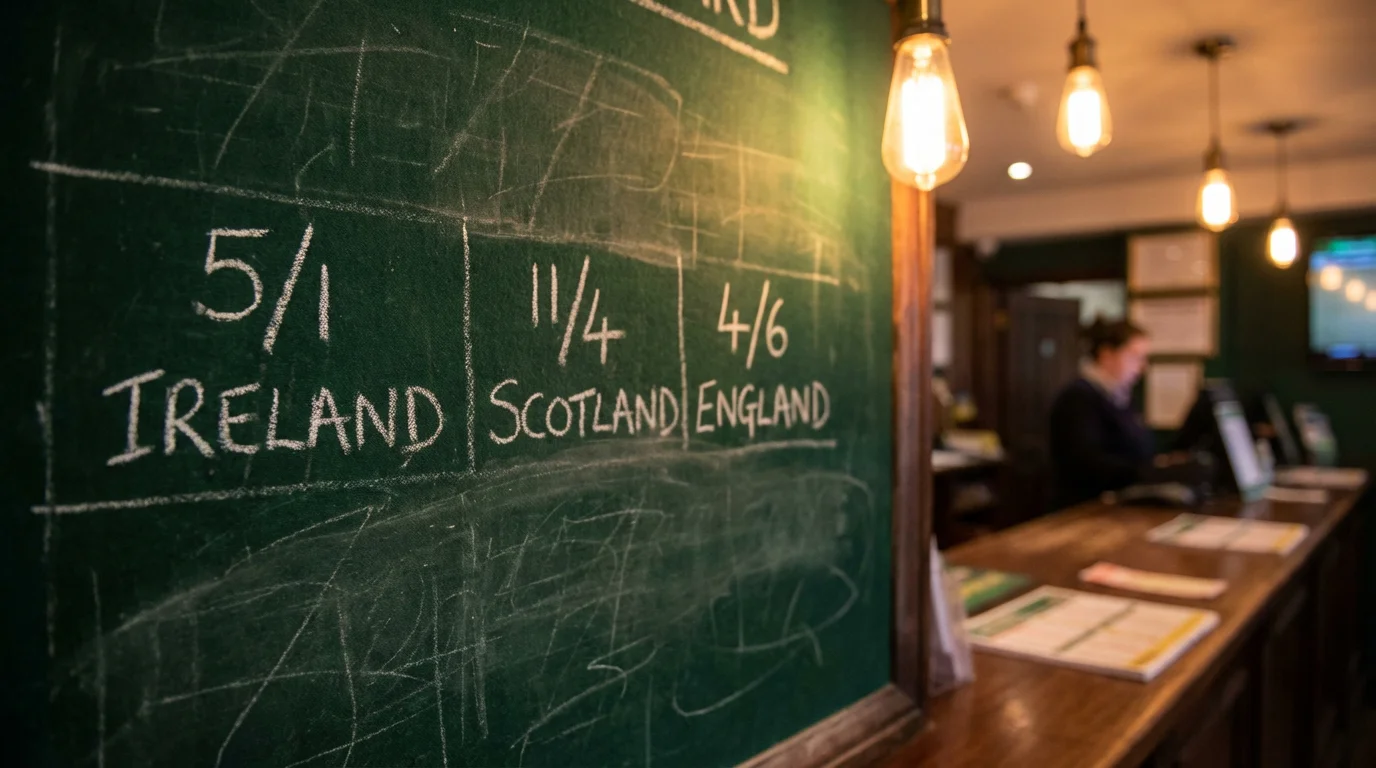
I placed my first World Cup ante-post bet in 2014 — Germany outright at 9/2, three months before the tournament kicked off in Brazil. It paid out. Not because I was brilliant, but because I had done the homework that most casual punters skip entirely. A decade and three World Cups later, the homework has only got harder. The 2026 edition rewrites everything we thought we knew about tournament betting: 48 teams instead of 32, 104 matches spread across three countries, and a knockout bracket that starts at the Round of 32. This World Cup 2026 betting guide is the framework I wish someone had handed me before that first punt — every market, every angle, every trap, stripped down to what actually matters when real money is on the line.
Whether you have been betting on football for years or you are sizing up your first World Cup slip, I have built this around one principle: understand the structure before you touch the odds. The bookmakers have had months to price this tournament. Your edge — if one exists — comes from understanding what the new format does to probabilities, where fractional odds hide margin, and which bet types reward patience over impulse. Let me walk you through all of it.
The 48-Team Shake-Up — What It Means for Your Bets
At the 2022 World Cup in Qatar, 32 teams played 64 matches over 29 days. In 2026, FIFA expands to 48 teams, 104 matches, and 39 days of football across the United States, Mexico, and Canada. That is not a cosmetic change — it is a structural overhaul that alters the mathematics behind every single market your bookmaker offers.
The group stage now features 12 groups of four. The top two from each group advance automatically, and the eight best third-placed sides join them, sending 32 teams into the knockout rounds. If you are accustomed to the old format, where finishing third usually meant elimination, adjust your thinking immediately. At the 2026 World Cup, a side can lose a group match, finish third on four points, and still reach the Round of 32. That changes how you assess group-stage match betting, because teams have a safety net that did not exist before.
Consider what this does to outright markets. In a 32-team tournament, a genuine contender needs to win six knockout matches to lift the trophy — assuming they top their group. In 2026, the path from the group stage to the final is seven matches for most sides, and potentially eight for a third-placed qualifier. The probability of any single team winning seven consecutive elimination matches drops compared to six. That is why you will see outright odds on favourites like Brazil, Argentina, and France sitting slightly longer than you might expect — the extra round of knockouts compresses the field’s combined probability. The bookmakers know this, but many punters still carry the old format’s expectations in their heads.
For group betting specifically, the third-place equation creates an entirely new market layer. At the 2022 World Cup, group winner and qualification bets were relatively binary — you either made the top two or you went home. Now, “to qualify from the group” includes the possibility of qualifying as a best third-placed team. Bookmakers have to price three distinct outcomes: first, second, or third-and-through. That ambiguity is where value tends to appear, because the pricing of three-way probabilities is inherently less efficient than two-way.
There is a geographical wrinkle as well. Matches are spread across 16 stadiums in three time zones — from Vancouver on the Pacific coast to MetLife Stadium in New Jersey. Travel distances between group-stage venues can exceed 3,000 kilometres. For teams drawn into groups with widely separated venues, fatigue and travel become genuine factors by the third match. If you are used to European Championships where stadiums are relatively close together, recalibrate. The 2026 World Cup is closer in logistics to the 1994 tournament in the United States, where travel visibly affected some squads by the knockout stage. That has direct implications for how you assess late group-stage and Round of 32 matches.
The additional 16 teams also dilute overall squad quality in the group stage. Several sides — Haiti, Curaçao, Cabo Verde, New Zealand — are making their first World Cup appearance or returning after decades away. Group-stage blowouts become more likely, which affects goals markets (over/under lines) and correct-score betting. If you back overs in matches featuring a genuine mismatch, the expanded format works in your favour. If you prefer tight, tactical affairs, focus on the groups that pair established sides against each other — Group C with Brazil, Morocco, and Scotland, or Group L with England and Croatia.
The bottom line: the 48-team format does not just add teams. It adds complexity. Every market you look at — outright, group winner, match result, over/under — is shaped by a tournament structure that has never been tested at a World Cup. The bookmakers have models for this, but models built on a format that has never happened are models built on assumptions. That gap between model and reality is your hunting ground.
Reading Fractional Odds Without Losing the Plot
A friend of mine — sharp punter, ten years of Premier League accas under his belt — once told me he avoids ante-post tournament bets because “the fractions make my head swim.” He is not alone. Fractional odds remain the default at every major Irish bookmaker, from Paddy Power to BoyleSports to Bar One Racing, and if you cannot read them fluently, you are making decisions in the dark.
The principle is simpler than it looks. A fractional odd tells you how much profit you make relative to your stake. At 5/1, you win five euros for every one euro staked — plus your original euro back. At 11/4, you win eleven euros for every four staked. At 4/6, you win four euros for every six staked — which means you need to risk more than you stand to gain, because the bookmaker considers that outcome more likely than not.
The fraction itself splits into two numbers: the left is your potential profit, the right is the stake required. When the left number is larger than the right — 5/1, 3/1, 7/2 — the selection is priced as an underdog. When the right number is larger — 4/6, 1/3, 2/7 — the selection is a favourite, sometimes a heavy one. Evens (1/1) sits in the middle: you double your money if it lands.
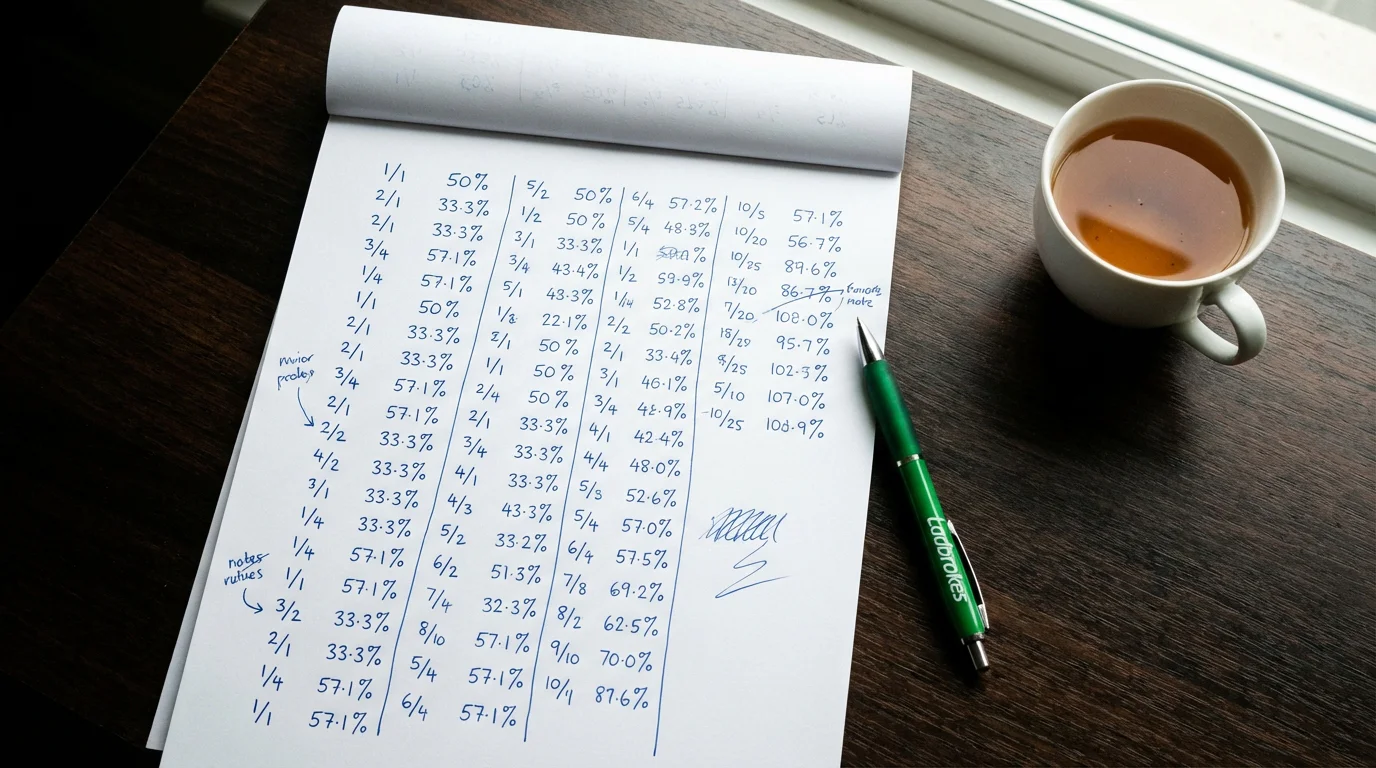
Where punters lose the plot is in comparing fractional odds across different markets. Is 11/4 better value than 5/2? To answer that, convert to implied probability. Divide the right number by the sum of both numbers, then multiply by 100. For 11/4: 4 divided by 15 equals 0.2667, or 26.7% implied probability. For 5/2: 2 divided by 7 equals 0.2857, or 28.6%. So 11/4 implies a lower probability — the bookmaker thinks that outcome is less likely — meaning 11/4 is the longer price. If you believe the true probability is, say, 30%, the 11/4 gives you more value because the market is underpricing the chance relative to your estimate.
I keep a simple mental shortcut for the most common fractions. Evens is 50%. 2/1 is 33%. 3/1 is 25%. 5/1 is 16.7%. 10/1 is 9.1%. Memorise those anchors and you can estimate everything in between without pulling out a calculator. When you see Argentina priced at 7/2 to win the tournament, you instantly know the bookmaker gives them roughly a 22% chance. Whether you agree with that assessment is the entire game.
Decimal odds, which display the same information as a single number — 5/1 becomes 6.00, 4/6 becomes 1.67 — are gaining traction online. Most Irish bookmaker apps let you toggle between fractional and decimal. I use decimal when comparing prices across multiple bookmakers, because it is faster to spot the highest number in a column than to mentally convert competing fractions. For everything else — casual conversation, quick mental estimates, reading the odds boards at a racecourse or a match — fractional remains the native language.
One more thing that separates informed punters from the rest: overround. The bookmaker’s margin is baked into every set of odds. If you add up the implied probabilities of all outcomes in a market, the total will exceed 100%. That excess — typically 5% to 15% depending on the market — is the bookmaker’s edge. In outright World Cup winner markets with 48 teams, the overround can reach 30% or higher, because each team’s odds carry a small slice of margin. In a two-way match-result market (home/away, no draw), the overround is usually much tighter. The practical takeaway: the fewer outcomes in a market, the less margin you are paying. That is one reason why experienced punters often prefer match betting and double-chance markets over sprawling outrights.
Fractional odds are a language, not a puzzle. Once you speak it, every market at the 2026 World Cup odds board becomes readable at a glance. Spend twenty minutes drilling the conversions until they are automatic, and you will never again wonder whether 11/4 is worth the risk.
The Bet Types That Actually Matter at a World Cup
Walk into any bookmaker’s World Cup section and you will find dozens of markets per match — everything from outright winner to the nationality of the first goalscorer’s club team. Most of them exist to generate volume, not to reward analysis. After nine years covering international tournament markets, I have narrowed my focus to five bet types that consistently offer the best combination of analytical edge and reasonable margin. Everything else is noise.
Outright Winner
The flagship market. You pick which team lifts the trophy on 19 July at MetLife Stadium. Outright bets are placed ante-post — before the tournament starts — and your money is locked in until the final whistle. The appeal is obvious: long odds, big potential returns. Brazil at 9/2, France at 5/1, England at 8/1. The trap is equally obvious: in a 48-team, seven-round knockout format, even the best side has a roughly 10-15% chance of winning it all. You are betting against the field, and the field is deep.
Outright bets reward conviction and patience. The optimal time to place them is weeks or months before kick-off, when odds are longest and market inefficiency is highest. Once the tournament begins and results roll in, the bookmakers adjust rapidly — a side that wins their first two group matches will see their outright price shorten dramatically. If you fancied them at 8/1 in April, you will be staring at 4/1 by the Round of 32. Ante-post discipline means committing before you have the comfort of early results.
Group Winner and Qualification
This is where I spend most of my pre-tournament stake. Group markets are bounded — there are only four teams, three matches, and a finite set of outcomes. The analytical work is manageable: you can assess each team’s recent form, head-to-head history, and squad depth within a clearly defined context. Group winner bets ask you to identify the side that tops the table. Qualification bets ask which teams finish in the top two — or, in 2026, the top three if they are among the best third-placed sides.
The 48-team format adds nuance. In some groups — Group J with Argentina, or Group E with Germany — the favourite is so dominant that the group-winner market is priced at prohibitive odds (Argentina at 2/7, for instance). The value shifts to the qualification market for the second or third team. In tighter groups — Group F with the Netherlands and Japan, Group K with Portugal and Colombia — group-winner bets carry real uncertainty and therefore better prices.
Match Result and Double Chance
Match result (1X2) is the most liquid market for every individual fixture. You back the home side, the draw, or the away side. At a World Cup played on neutral ground — every match in 2026 is technically neutral, though host nations get a soft advantage — the home/away labels refer to the team listed first in the fixture. Margin on 1X2 markets is typically 5-8%, considerably tighter than outrights.
Double chance — backing two of the three outcomes (home or draw, away or draw, home or away) — compresses the odds but dramatically improves your strike rate. If you believe Scotland will not lose to Haiti but are unsure whether they will win or draw, “Scotland or draw” in Group C is a double-chance bet. The payout is smaller, but the probability of landing it is significantly higher. I use double chance extensively in the group stage, where a single upset can wreck a match-result slip but rarely torpedoes a well-constructed double-chance selection.
Over/Under Goals
Bookmakers set a line — usually 2.5 goals for a World Cup group match — and you bet whether the total goals scored will be over or under that line. The beauty of this market is that it detaches entirely from which team wins. If you believe a match between Germany and Curaçao will be one-sided and high-scoring, you can back over 2.5 goals without caring who scores them.
The 48-team format is likely to produce more lopsided group-stage matches than previous tournaments, which historically pushes early-round goal averages upward. At the 2022 World Cup, the group-stage average was 2.78 goals per match. With genuine mismatches now more common — France against Iraq, Argentina against Jordan — that average could rise. If the bookmaker’s line stays at 2.5, the over becomes statistically more attractive in fixtures featuring a significant quality gap.
Asian Handicap
Asian handicaps eliminate the draw by applying a goal advantage or disadvantage to one team. If you take Brazil at -1.5 goals against Haiti, Brazil need to win by two or more for your bet to land. If Haiti keep it to a one-goal defeat, you lose. This market forces a binary outcome — win or lose, no push — and the tighter margins (typically 3-5% overround) make it the preferred market for sharp bettors.
At a World Cup, Asian handicaps shine in matches where the result is near-certain but the margin of victory is the real question. Backing a heavy favourite at -1.5 or -2.5 offers far better value than taking them on the match-result market at 1/7, where you risk a euro to win fourteen cents. I use Asian handicaps in at least a third of my match-level bets during the group stage, switching to match result and double chance in the knockouts where margins tend to be thinner and one-goal differences are the norm.
Everything else — first goalscorer, correct score, half-time/full-time, specials on yellow cards or corners — falls into the entertainment category. Fun for a flutter, but the margins are wider and the analytical edge is nearly zero. If you are serious about your World Cup 2026 betting, stick to the five markets above. They are where the bookmakers are most efficient, which, paradoxically, is also where the sharpest edges hide — because efficiency means smaller margins, and smaller margins mean you lose less to the house on every bet you place. Over 104 matches, that difference compounds.
Accumulators at a 104-Match Tournament — Friend or Trap?
The acca is the most seductive bet in football. Four, five, six selections folded together, each one multiplying the odds of the last, turning a ten-euro stake into a four-figure payout. During a World Cup, with multiple matches running every day, the temptation to build accumulators is relentless. And that is precisely what the bookmakers are counting on.
Here is the maths that acca enthusiasts rarely confront. If each leg of your accumulator has a 60% probability of landing — which is roughly what a well-selected group-stage favourite gives you — a four-fold acca has a combined probability of about 13%. A five-fold drops to 7.8%. A six-fold hits 4.7%. You are more likely to lose than win on every acca you place, and the margin compounds with each additional leg. The bookmaker’s overround, which might be 6% on a single match, balloons to 25% or more across a five-fold. You are paying a premium for the thrill of a big number on the potential payout line.
That does not mean accumulators are always a mistake. It means they require discipline that most punters lack. The first rule: keep it short. A double or treble offers a meaningful payout boost over a single while keeping the combined probability in a manageable range. A double at 60% per leg still gives you a 36% hit rate. That is roughly one in three — uncomfortable, but workable over the course of a tournament with 104 matches.
The second rule: build each leg around a different market. A common error is stacking match results — backing four favourites on the same matchday. If the group-stage narrative shifts — a red card, an early upset, a dead rubber where a team rests starters — your entire acca collapses on a single afternoon. Instead, combine one match-result selection with one over/under, one Asian handicap, and perhaps one group qualification bet. Diversifying the market type means each leg depends on a different set of variables, reducing the correlation between them.
The third rule: never let the payout drive the selection. I have watched punters add a sixth leg to an acca purely because it bumped the potential return past a psychological threshold — “if I add Japan to beat Tunisia, it goes over a thousand.” That final leg, added for cosmetic reasons, is the one most likely to sink the slip. Every selection must stand on its own merits. If you would not back it as a single, it does not belong in your acca.
At the 2026 World Cup, the bet types available across 104 fixtures will generate thousands of accumulator combinations. The smart approach is to treat accas as occasional high-conviction plays — two or three across the entire group stage, built from selections you have individually analysed — rather than a daily habit. One well-constructed treble that lands is worth more than twenty speculative five-folds that do not.
Live Betting on Late-Night Kick-Offs from Ireland
When this tournament’s fixtures land in Irish Standard Time, the schedule will test your stamina as much as your judgement. The United States operates across four time zones, and the majority of the 78 matches hosted there will kick off between 13:00 and 21:00 local time. Translated to IST — which runs at UTC+1 during June and July — that means kick-offs ranging from 18:00 to 02:00 in the small hours. A 21:00 ET start in New York is a 02:00 kick-off in Dublin.
For live betting — also called in-play — this creates a dynamic that European tournaments never do. In-play markets at a Euros or a Champions League final are prime-time events, with the punter fully alert and the bookmaker’s algorithms running at peak efficiency. A 2026 World Cup match starting at midnight IST is a different animal. You are tired. The bookmaker’s algorithm is not.
I have covered enough late-night fixtures to know that fatigue is the biggest enemy of in-play discipline. Decision-making deteriorates after midnight. Impulse bets — chasing a goal that feels imminent, doubling down after a bad in-play call — cluster in the 70th minute onward, when both the match and the punter are in the late stages. If you are going to bet in-play on late IST kick-offs, set a hard in-play budget before the match starts and stick to it regardless of what happens on the pitch.
The upside of late kick-offs is thinner in-play markets. Bookmakers calibrate their in-play pricing models partly on trading volume — the more money flowing in, the tighter and more accurate the odds. At 01:30 IST on a Wednesday, European trading volume is lower than it would be for a Saturday afternoon fixture. That can create moments where the in-play odds lag behind the action on the pitch, particularly after a goal or a red card. If you are sharp and alert — a genuine if at that hour — those windows of mispricing are slightly wider than they would be during a daytime fixture.
The practical strategy: prioritise the earlier kick-offs for in-play betting. Matches starting at 18:00 or 19:00 IST fall within your natural decision-making window. Save the late-night fixtures for pre-match bets placed before kick-off, when you can analyse the teams with a clear head and let the bet ride without watching every minute. I know the appeal of live-betting a midnight match with a beer in hand. I also know the regret of an impulse cash-out at 01:45 that would have paid in full if I had simply gone to bed.
One more timing factor: the matches hosted in Mexico — at Estadio Azteca, Estadio BBVA in Monterrey, and Estadio Akron in Guadalajara — are in Central Time (UTC-5 during summer), which puts their kick-offs one hour earlier than East Coast US matches. A 19:00 Mexico City start is midnight IST. Still late, but an hour makes a difference when you are trying to stay sharp through extra time.
Bankroll Basics — How Not to Go Bust Before the Knockouts
The 2026 World Cup runs for 39 days. Thirty-nine days of matches, markets, and temptation. I have seen punters blow their entire tournament budget in the first week of a major championship, chasing losses from the opening round of group matches, and then spend the knockout stage watching from the sidelines with nothing left to play for. The fix is not willpower — it is structure.
Before the tournament starts, decide on a total World Cup bankroll. This is the amount you are prepared to lose entirely, without affecting your rent, bills, or sanity. Write it down. Not a mental figure — an actual number written on paper or locked in a note on your phone. For the sake of illustration, say your bankroll is 200 euros. That is the ceiling, and nothing that happens during the tournament changes it. No top-ups, no “just another fifty because Argentina lost.”
Divide the bankroll into units. A standard approach is 1-2% per bet, which on a 200-euro bankroll means two to four euros per selection. That feels small when you are staring at an 8/1 outright. It is meant to feel small. Unit sizing exists to keep you in the game for the full 39 days. If you stake 5% per bet — ten euros on a 200-euro bankroll — a run of ten losing bets eliminates half your capital. At 2% per bet, the same losing streak costs you 20%, leaving you with 160 euros and plenty of runway to recover.
The group stage is 48 matches in the first two rounds, with up to 16 fixtures running on a single day during the busiest stretches. The volume is intoxicating. Every match feels like an opportunity. It is not. I allocate roughly 40% of my bankroll to the group stage, 30% to the Round of 32 and Round of 16, and 30% to the quarter-finals onward. The rationale: the early rounds are where my analytical edge is smallest — squads are untested at the tournament, form from qualifiers is unreliable, and the 48-team field includes sides I have barely scouted. As the tournament progresses and information accumulates, my confidence in each bet improves, and I want capital available to act on it.
Losses are inevitable. At a strike rate of 55% — which is strong for match-level betting — you will lose 45 out of every 100 bets. Some of those losses will cluster. You will have days where every selection falls apart, often for reasons you could not have predicted: a penalty in the 93rd minute, a goalkeeper error, a controversial VAR decision. The bankroll structure exists to absorb those clusters. If you are staking sensibly and diversifying across markets and matchdays, a bad opening week is a dent, not a disaster.
One final discipline point: keep a record. I use a simple spreadsheet — date, match, market, selection, odds, stake, result. After the tournament, that record is more valuable than any pundit’s recap, because it tells you exactly where your strengths and weaknesses lie. Did you profit on group-stage doubles but lose on outright accas? Did Asian handicaps outperform match-result bets? The data from one tournament informs your approach to the next. Betting without records is guessing twice — once on the match, and once on whether your method actually works.
The Pre-Bet Checklist I Use Before Every Tournament Punt

Nine years of tournament betting — World Cups, Euros, Copa America — have taught me that the difference between a profitable month and a losing one is almost never about picking the right team. It is about the process before the pick. Every selection I make runs through the same checklist, and I am giving you the version I use, stripped of the spreadsheet formulas but keeping the logic.
First: have I identified the specific edge? Not a general feeling — “I think Brazil are underpriced” — but a specific reason the odds do not reflect reality. Maybe Brazil’s defensive record in qualifiers (0.4 goals conceded per match) does not square with their outright price. Maybe the bookmaker has not adjusted for a key injury confirmed in the last 48 hours. If I cannot articulate the edge in one sentence, I do not bet.
Second: is this the right market for the edge? If my edge is that Morocco’s defence will keep Group C tight, the correct market is under 2.5 goals in Morocco’s fixtures, not a match-result bet. Punters constantly identify a real insight and then express it through the wrong market — backing a team to win when the insight actually points to a goals market or a handicap. Match the market to the insight, not the other way around.
Third: does the price justify the risk? I convert the fractional odds to implied probability and compare it to my own estimate. If my estimate is 35% and the implied probability is 30%, there is a five-percentage-point edge — meaningful in a tight-margin market. If the gap is one or two points, it is not enough to overcome the bookmaker’s margin. I want a minimum three-point gap before I commit a stake.
Fourth: what is the information timeline? If I am betting on a group match three weeks before kick-off, the odds will move as team news, injury updates, and market sentiment shift. Ante-post bets carry the risk that information changes between placement and kick-off. If the edge depends on a specific player being fit, I wait for confirmed squad announcements. If the edge is structural — a format-related insight or a tactical mismatch — earlier placement captures a longer price.
Fifth: does this bet fit within my bankroll plan? Even a selection that passes the first four checks is a bad bet if the stake is too large for where I am in the tournament. If it is matchday one and I have already placed three bets today, adding a fourth is a volume decision, not a quality one. Tournament betting is a marathon. I would rather miss a marginal edge on day two than be under-capitalised for a strong edge on day twenty.
Sixth — and this is the one most punters skip — can I lose this bet and feel fine about it? Not financially, but analytically. If the selection loses, will I look back and say “the process was right, the outcome was not”? Or will I think “I knew I was reaching”? That gut check, applied honestly, filters out more bad bets than any model or formula I have ever used.
Print this list, pin it beside your screen, and run every World Cup 2026 prediction through it. The selections that survive all six checks are the ones worth your money. The ones that do not are the ones the bookmakers hope you back anyway.
Your Homework Before 11 June
The opening match — Mexico against South Africa at Estadio Azteca — kicks off on 11 June 2026. Between now and then, the World Cup 2026 betting guide you have just read gives you the framework: the format, the odds language, the markets, the bankroll logic, the checklist. What it does not give you is the tournament-specific knowledge that separates a prepared punter from a hopeful one.
That homework starts with the groups. Study all twelve — not just the ones with the big names. The value at a 48-team tournament often hides in Group G or Group K, not in Group J where Argentina are priced at 2/7 to top the table. Familiarise yourself with the full group breakdown, note where the mismatches are, and identify the tight groups where qualification markets carry genuine uncertainty. Then look at the squads. A team’s qualifying form tells you something; their friendlies and recent competitive fixtures tell you more. Track injuries to key players, monitor managerial changes, and pay attention to the pre-tournament camps that begin in late May.
Set your bankroll, divide it into units, and draft your staking plan before the first ball is kicked. If you are placing ante-post bets — the glossary covers that term if it is new to you — do it with a clear head and a calculated edge, not because the countdown clock on a bookmaker’s homepage creates artificial urgency.
This tournament is unprecedented in scale. Forty-eight teams, 104 matches, three countries, 39 days. That scale creates opportunity and chaos in roughly equal measure. The punters who profit will be the ones who treated the preparation as seriously as the punting itself. Do the work now, and when the whistle blows in Mexico City, you will be ready.
