
MetLife Stadium — World Cup 2026 Final Venue and Betting Context
 Available in US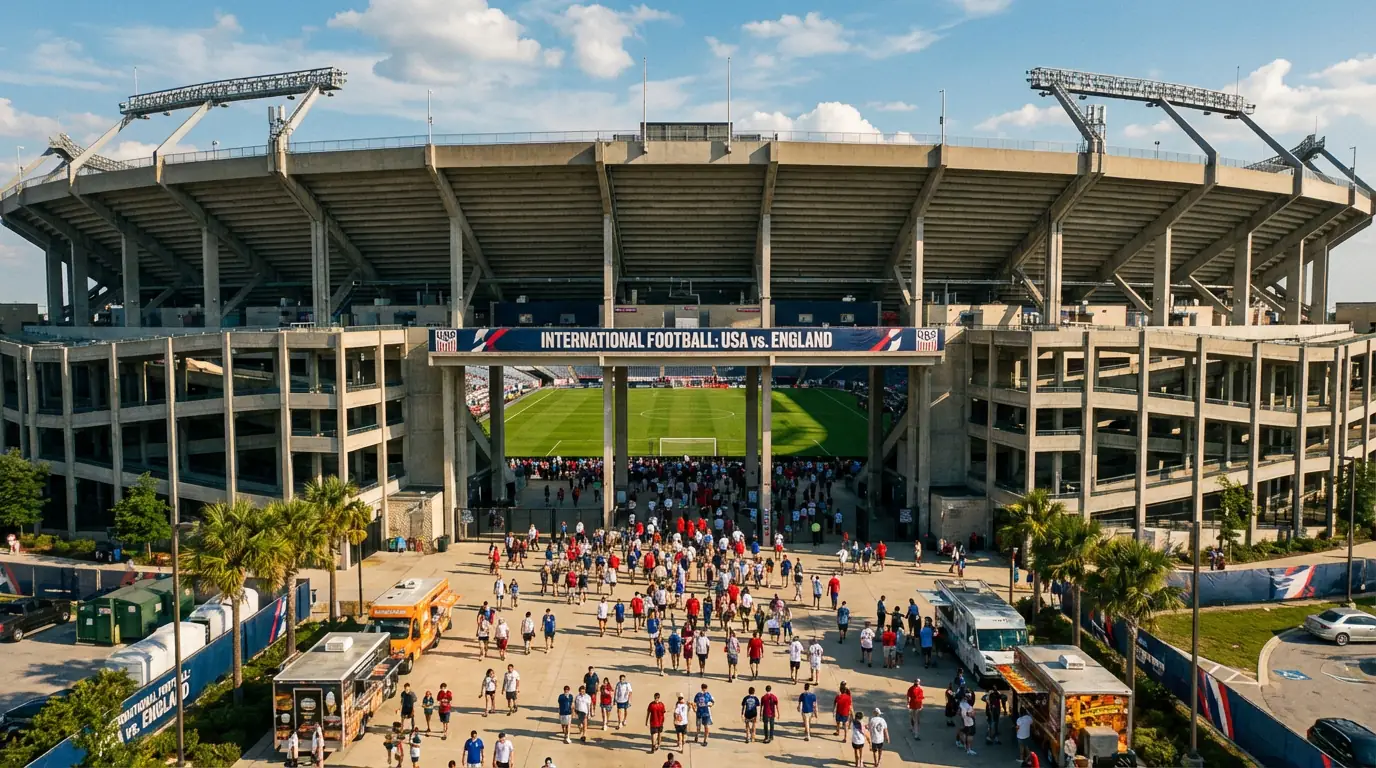
The 2026 World Cup final will be played at a stadium built for American football, in a suburb of New Jersey that most Europeans could not locate on a map. MetLife Stadium in East Rutherford — technically not in New York City despite what the marketing will tell you — holds the distinction of hosting the single most important match in football history’s biggest tournament. For punters, the venue itself is not a neutral variable. Pitch dimensions, surface quality, climate, and crowd composition all feed into the odds, and understanding MetLife’s characteristics gives you an edge that most casual bettors will not have.
Stadium Profile — Capacity, Surface, Conditions
I visited MetLife during an NFL season, and the scale is immediately striking. The stadium seats approximately 82,500 for football configuration, making it one of the largest venues in the tournament and by far the biggest for the final itself. The structure is open-air — no retractable roof, no climate control — which means the playing conditions are entirely at the mercy of the New Jersey summer weather. For a mid-July final, that translates to heat, humidity, and the possibility of summer thunderstorms that can arrive with minimal warning and transform a dry pitch into a slippery surface within minutes.
The pitch will be natural grass installed specifically for the World Cup, replacing the artificial turf that the stadium normally uses for the NFL’s New York Giants and New York Jets. That transition is significant. Temporary natural grass pitches laid over existing synthetic surfaces have historically produced inconsistent bounce and variable footing, particularly in the corners and near the touchlines where the turf edges meet the existing surface. Players accustomed to the manicured pitches of European stadiums will notice the difference, and the surface quality could influence match outcomes in ways that the betting markets do not fully price.
The altitude is negligible — East Rutherford sits just above sea level — so there is no atmospheric variable comparable to the Estadio Azteca. What matters at MetLife is the combination of heat, humidity, and a pitch surface that may deteriorate over the course of a 90-minute match played at the highest intensity. The stadium’s open design means no shade for players during afternoon or early-evening kick-offs, and the cumulative fatigue of a tournament that stretches across 39 days will be visible on the pitch by the time the final arrives.
World Cup 2026 Matches at MetLife
MetLife Stadium hosts several group-stage matches and knockout-round fixtures before the final on 19 July. The exact allocation includes at least one semi-final and the final itself, making MetLife the tournament’s flagship venue. For punters tracking venue-specific patterns, the group-stage matches at MetLife will provide the first data points on how the pitch plays, how the crowd responds to different teams, and how the climate affects match tempo and goal-scoring patterns.
The scheduling is critical. Group-stage matches at MetLife will likely feature teams from different groups, providing no direct comparison for the later knockout rounds. But the patterns — is the pitch producing goals? Are teams struggling physically in the second half? Are the conditions favouring technical football or physical dominance? — will be observable from matchday one and will inform the live-betting approach for the quarter-finals, semi-finals, and the final itself.
For Irish viewers, MetLife’s matches will fall into the prime evening IST window due to the East Coast time zone — typically 23:00 to 02:00 IST, with the final itself likely kicking off at approximately 21:00 local time, which translates to 02:00 IST on 20 July. A Monday-morning start for the World Cup final is not ideal for Irish audiences, but the event’s significance will override scheduling inconvenience.
The Venue Context — Weather, Pitch and Betting Angles
New Jersey in July averages temperatures between 24 and 31 degrees Celsius with relative humidity frequently exceeding 70%. Those are demanding conditions for any athlete, and for footballers who have spent the past nine months playing in European climates where summer rarely exceeds 25 degrees, the adjustment is significant. South American and African squads, accustomed to heat and humidity in their domestic and continental competitions, hold a marginal advantage — and in a World Cup final, marginal advantages become decisive.
The humidity factor affects in-play betting in specific ways. High humidity accelerates fatigue, which means second-half goals become more likely as defensive concentration wanes. The over 2.5 goals market in matches played at MetLife during the afternoon could offer value if the first half produces a tight, controlled contest — the second half is where tired legs and lapses of concentration create the openings that change scorelines. I have tracked this pattern across multiple tournaments in warm climates, and the data consistently shows that matches played in humidity above 60% produce a disproportionate share of goals after the 60th minute.
The pitch surface introduces another variable. Temporary grass laid over synthetic turf tends to cut up faster than established natural surfaces, particularly in high-traffic areas — the centre circle, the penalty spots, and the wide channels where wingers change direction at speed. By the semi-final stage, the MetLife pitch could resemble a patchwork rather than the pristine surface of the opening matches. That deterioration favours physical, direct teams over possession-based sides that rely on quick, short passing — the ball will not zip across a deteriorating surface the way it does at the Bernabeu or the Allianz Arena.
East Rutherford and the New York Metro Area
MetLife Stadium sits in the Meadowlands Sports Complex in East Rutherford, approximately 12 kilometres west of Manhattan. The venue is accessible by rail and road from New York City, but the surrounding area lacks the urban energy that European football fans associate with major tournament venues. There are no pubs, plazas, or fan zones within walking distance of the stadium — the Meadowlands is a suburban sports complex surrounded by marshland and highway infrastructure. For the 2026 World Cup, temporary fan facilities and transport links will transform the area, but the atmosphere outside the stadium will be manufactured rather than organic.
Inside the stadium, the atmosphere will be determined by the specific teams playing. New York City has the most diverse population of any metropolitan area in the world, which means every team at the World Cup will have a meaningful fan presence at MetLife. A Brazil versus Argentina semi-final would produce an atmosphere comparable to any stadium on earth; a match between two smaller nations would rely more heavily on neutral spectators and the ambient energy of the occasion. For betting purposes, the crowd factor at MetLife is unpredictable — it depends entirely on the fixture, and the in-play markets will adjust as the pre-match atmosphere becomes visible.
The East Coast location also matters for broadcast and betting liquidity. MetLife’s time zone alignment with European markets means that evening kick-offs produce the highest liquidity windows — European punters are still active, American markets are fully engaged, and the Asian morning audience adds a third layer. The final itself, at 02:00 IST, will generate the deepest betting markets of the tournament, and the in-play spreads will be tight enough to make every 15-minute trading window a viable opportunity.
The Insider Note on Finals Venues
Every World Cup final venue carries its own character, and understanding that character is part of reading the match. The Lusail Stadium in Qatar was compact, loud, and favoured teams that thrived in intense atmospheres. The Luzhniki in Moscow was vast, cold, and rewarded sides with the mental discipline to block out the occasion. MetLife will be hot, humid, and played on a surface that may not hold up to the demands of the biggest match in football. Those conditions favour sides with deep squads, experienced tournament campaigners, and the physical conditioning to sustain intensity in the second half when the heat and the occasion combine to drain energy from less prepared opponents.
If you are placing an ante-post bet on the World Cup final, factor the MetLife conditions into your assessment. South American sides with heat acclimatisation, European sides with deep squads capable of rotation, and African teams whose domestic environments mirror the New Jersey summer all gain a fraction of an edge at this venue. That fraction, over the course of 90 or 120 minutes, can be the difference between lifting the trophy and finishing second.
