
England at the 2026 World Cup — The Irish Punter’s Dilemma
 Available in US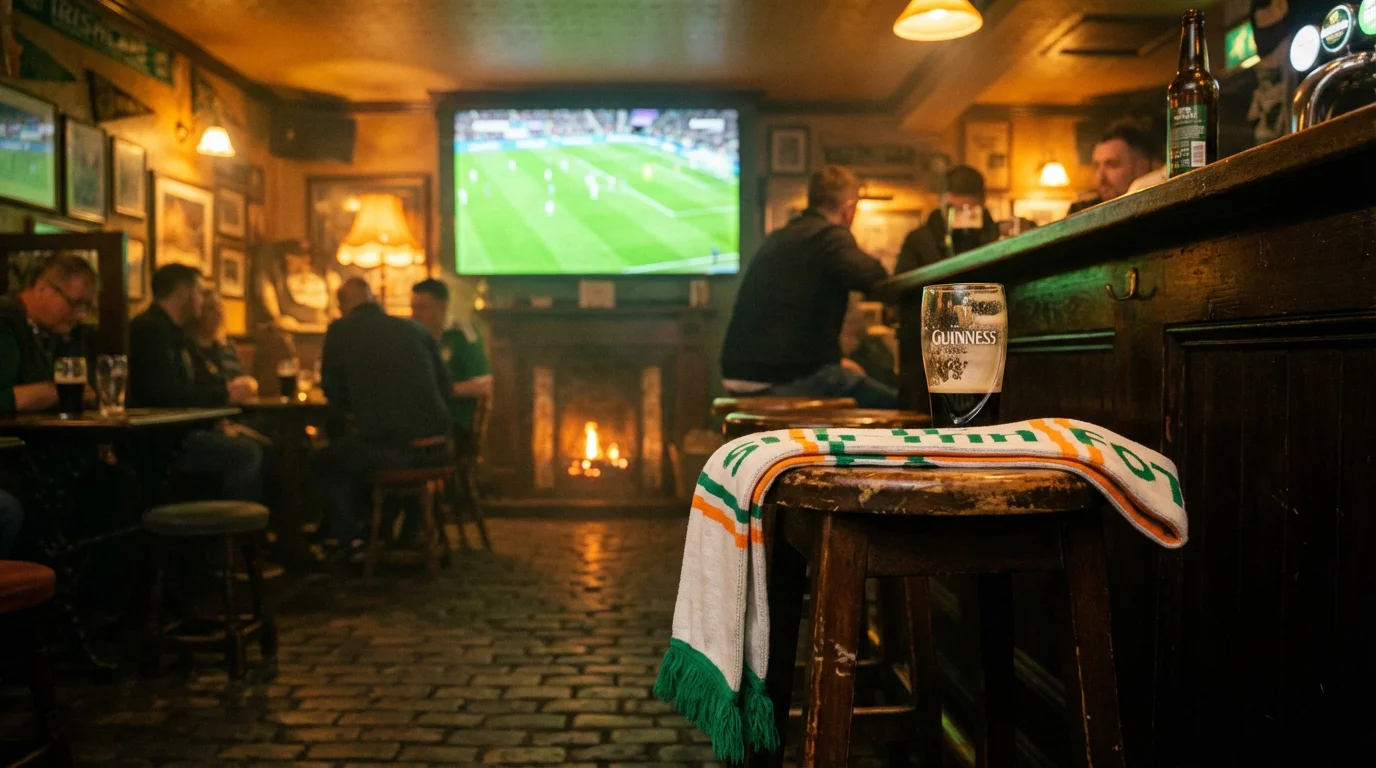
Half of Ireland watches the Premier League every weekend and then refuses to back England in a tournament. I have seen it in every pub from Galway to Wexford — the same lads who cheer for Liverpool and Arsenal on Saturday afternoons will insist, pint in hand, that England “always choke” when a major competition arrives. The funny thing is, they are not entirely wrong. England’s record of reaching finals and semi-finals over the past eight years has been remarkable, but the trophy cabinet remains stubbornly empty. For Irish punters, England at the 2026 World Cup presents a genuine dilemma: do you back a squad you know intimately from the Premier League, or do you trust the pattern of near-misses that defines their tournament history?
England land in Group L alongside Croatia, Ghana, and Panama. They are heavy favourites to win the group and strong contenders for the tournament. The squad depth is extraordinary — arguably the deepest England have produced in the Premier League era. The question, as always with England, is not about talent. It is about whether the talent converts when the stakes are highest.
The Premier League Pipeline — Squad Depth Nobody Can Match
I counted the other day: England’s preliminary squad for the 2026 World Cup contains seventeen players who play for clubs that finished in the top eight of the Premier League this season, plus another six who play for Champions League clubs in Spain, Germany, and Italy. That kind of concentration of elite club talent is without precedent in English football, and it shows in the squad’s versatility. The coach can deploy a 4-3-3, a 3-4-3, a 4-2-3-1, or a diamond midfield without dropping below the quality threshold required to compete at the highest level.
Jude Bellingham has become the centrepiece. His first two seasons at Real Madrid have confirmed what his Dortmund years suggested — he is a generational talent, a midfielder who combines the goal threat of an attacking player with the defensive discipline of a holding one. His ability to arrive late in the box and finish is the kind of X-factor that decides tournament matches, and his big-game temperament — demonstrated in Champions League finals and international knockouts — means he thrives rather than shrinks when the pressure escalates.
Around Bellingham, the attacking options are almost embarrassingly rich. Phil Foden provides creativity and a left-footed balance. Bukayo Saka is the most reliable wide forward in the Premier League, combining end product with defensive effort. Harry Kane, despite the club move to Munich, remains one of the most clinical strikers in world football — his record of goals per minute in international tournaments is the best of any active player. Cole Palmer has emerged as the wildcard — a player whose composure and finishing ability from the right side of the attack give England a dimension they lacked at the 2022 World Cup.
The midfield depth extends beyond Bellingham. Declan Rice provides the defensive anchor — a player whose development from a holding midfielder into a progressive ball-carrier has been one of the stories of the past three seasons. Kobbie Mainoo, barely into his twenties, adds youthful energy and the ability to beat a press through dribbling. The full-back positions are well-stocked with Trent Alexander-Arnold and Kyle Walker offering experience, and younger options pushing for places.
Defensively, the centre-back options have improved. John Stones remains the most trusted option for building from the back, and his partnership with whichever second centre-back is selected — most likely Marc Guehi or Levi Colwill — provides a balance of aerial dominance and composure on the ball. The goalkeeping situation is settled with Jordan Pickford, whose tournament record is impeccable despite the occasional league-form question mark.
The depth chart runs two-deep in almost every position, and in some positions three-deep. This is the squad that every other nation’s coach looks at with envy — and the one that England’s own fans and pundits scrutinise more harshly than any external rival could. The talent has never been the problem. The conversion rate has.
What makes this squad different from previous England generations is the European club experience. Players like Bellingham, Kane, and Saka have spent their formative years in environments where winning trophies is the expectation rather than the aspiration. That mentality — the belief that they belong in finals rather than just reaching them — is something previous England squads lacked. Whether it translates from club to country remains the great English football question, but the raw material for a winning mentality is present in this group in a way it was not in 2018 or 2022.
How Qualification Went — and What It Hid
England’s qualification was, on the surface, routine. They won their group comfortably, scored freely, and conceded sparingly. Beneath the headline results, two patterns stood out to me. First, England struggled when opponents pressed them high and forced quick decisions in midfield. In the two matches where opponents committed to a high press — notably the away fixture against a well-organised Swiss side — England’s build-up was ponderous, and they relied on long balls to Kane rather than the progressive passing that their midfield talent should facilitate. Second, England’s record in matches where they fell behind was poor. In the three qualifying matches where they conceded first, they won only once.
These are not damning flaws. Many good sides have similar profiles. But they suggest a vulnerability that smart opponents in the knockout rounds will target: force England into situations where they must chase the game, disrupt their preferred tempo, and exploit the gap between their controlled possession phase and their urgent attacking phase. France, Spain, and Germany all press effectively and can exploit transitions — the kind of opponents England are likely to meet from the quarter-finals onwards.
The coaching setup has evolved since the 2022 World Cup. The tactical framework is more aggressive, with higher defensive lines and more emphasis on pressing in the opponent’s half. Whether that evolution survives the pressure of a knockout match — where the instinct to protect a lead often overrides the instruction to maintain intensity — remains the key tactical question for England’s campaign.
One detail from qualifying that I found telling: England’s substitution patterns. The coaching staff consistently waited until the sixty-fifth minute or later to make changes, even in matches where fresh legs could have shifted the dynamic earlier. At club level in the Premier League, managers routinely make their first substitution before half-time if the tactical situation demands it. The conservative approach to subs suggests a coaching philosophy that values control over disruption — and in tournament football, where a single substitution can change the trajectory of a match, that conservatism is a potential weakness. The bench is too talented to be underused.
Group L — Croatia, Ghana, Panama
England’s Group L draw is favourable but not without intrigue. Croatia, even in a transitional phase, have the tournament pedigree and tactical intelligence to cause problems. Ghana are physically imposing and tactically organised, with a squad that blends European club experience with raw athleticism. Panama are the weakest side on paper but will bring intensity and commitment that could disrupt England’s rhythm if the match is treated as a formality.
The Croatia match is the headline fixture — a rematch of the 2018 World Cup semi-final that Croatia won, the 2022 group-stage draw, and the 2024 Nations League encounter. The teams know each other intimately, and the tactical chess match between them will likely determine the group’s complexion. If Modric is fit and involved, Croatia’s ability to control midfield becomes a genuine threat to England’s structure. If Modric is managed or absent, Croatia lack the creative spark to trouble England consistently.
I project England to win the group, with Croatia second and Ghana fighting for a best-third-place spot. The group-winner price of around 1/3 offers thin returns but high probability. For accumulator purposes, England to win Group L is as reliable an anchor as any in this tournament.
The scheduling is worth noting for Irish punters. England’s group matches will kick off at times that translate to evening and late evening in Irish Standard Time — the 18:00 and 21:00 ET slots become 23:00 and 02:00 IST respectively. The earlier afternoon slots, around 13:00 ET, put England on at 18:00 IST, which is ideal for a midweek viewing. Live betting on England’s group matches from Ireland means late nights, and the in-play markets tend to be less liquid after midnight — something to factor into your live-betting plans if you intend to trade positions during the match.
From an Irish perspective, this is the group that will dominate the conversation in pubs and betting shops. The Premier League connection means Irish punters know these England players better than they know most of the Irish squad, and that familiarity breeds both confidence and suspicion in equal measure. My advice: separate what you know about these players on a Saturday from what you believe about them at a World Cup. They are different environments, and the player who dominates the Premier League does not always dominate a tournament.
The Knockout Bottleneck — Why England Stall in Tournaments
A friend who works in football analytics gave me a stat that I have not been able to shake: since 2018, England have played ten tournament knockout matches. They have won four in regular time. The other six went to extra time or penalties. That ratio — sixty percent of knockout matches requiring more than ninety minutes — is the worst of any side that has consistently reached the latter stages over the same period. France, by comparison, won six of their nine knockout matches in regular time. Argentina won five of seven.
What does this tell us? England play knockout football conservatively. When the stakes rise, the approach becomes more cautious — deeper defending, slower build-up, reluctance to commit bodies forward. This is not a new observation, and it is not limited to one coaching regime. It is a cultural pattern that predates the current squad: the fear of conceding outweighs the ambition to score, and the result is a series of tight, tense matches that could go either way.
For bettors, this pattern is gold. If you believe England will reach the knockout rounds — which I do — the match-specific markets offer better value than the outright. England matches in the knockouts consistently go over 90 minutes, which means the “draw at full time” market, the “extra time” market, and the “penalty shootout” market all offer edges. England at a World Cup are not a side that blows opponents away. They are a side that grinds to the finish line, and the grind is predictable enough to exploit.
The bottleneck also has implications for the outright market. Winning a World Cup requires four knockout victories. If England need extra time in even two of those four matches, the physical toll compounds — and against opponents who resolve their matches in ninety minutes, England arrive at the later rounds with tired legs and fewer tactical options. That cumulative fatigue is the mechanism through which the bottleneck eventually catches up with them, and it is the reason I shade England’s true outright probability lower than the market implies.
There is a psychological dimension too. A squad that repeatedly finds itself in nail-biting finishes develops either steel or anxiety — sometimes both in the same dressing room. England’s penalty record has improved dramatically since the horror shows of the 1990s and 2000s, largely through structured practice and psychological preparation. But the fact that they need penalties so often is itself the symptom of a deeper issue: the inability or unwillingness to kill matches off when they have the quality to do so. Against Panama or Ghana, that reluctance is survivable. Against France or Argentina in a semi-final, it becomes the defining factor.
Odds from Dublin — Should Irish Punters Back the Neighbours?
England are priced around 6/1 for the outright, making them the third or fourth shortest in the market. That implies a win probability of roughly fourteen percent. My estimate is closer to eleven or twelve percent, which puts fair odds at around 8/1. At 6/1, England are marginally overpriced relative to their true chances — but not enough to make them a strong value bet.
The Irish punter’s relationship with England in tournament betting is complicated. There is the emotional angle — many Irish bettors instinctively want England to fail, which creates a counter-intuitive opportunity. When the public is emotionally biased against a side, the sharp money can sometimes find value by going against sentiment. In England’s case, though, the emotional bias and the analytical assessment point in the same direction: England are good but probably not good enough to justify the price.
Where I see genuine value is in the “to reach the final” market. At around 3/1, this bet requires England to win three knockout matches — and given their talent, bracket position, and tournament pedigree, a final appearance is more likely than a title. The margin between reaching the final and winning it is exactly where England’s historical weakness lies, and the “reach the final” market lets you capture their upside without needing them to clear the final hurdle they have repeatedly failed to clear.
Mbappe’s Golden Boot odds are shorter than Kane’s, but Kane in a tournament where England are likely to play six or seven matches, with penalty duties and a central role in the attack, is a live contender for the top scorer. If England’s group-stage opponents — particularly Panama — concede heavily, Kane could enter the knockouts with three or four goals already banked. At around 12/1, Kane for the Golden Boot is the single best England-related bet I have identified.
One more angle for the Irish market specifically: the “England to be eliminated on penalties” special, which some bookmakers offer at around 4/1. Given the pattern I outlined earlier — sixty percent of knockout matches going beyond ninety minutes — and the expanded bracket that adds a Round of 32 before the quarter-finals, the probability of England facing at least one shootout is high. Whether they win or lose it is a coin flip in any given match, but the probability of the event itself is materially higher than the odds suggest. It is a morbid bet, mind you, and one that every Irish pub would celebrate with a particular enthusiasm.
The Verdict — Head, Heart or Leave Them Alone
England at the 2026 World Cup are a contradiction wrapped in a Three Lions shirt. The talent is world-class. The depth is elite. The tournament record is impressive — until the final match, where it collapses. For Irish punters, the dilemma is whether to let the head overrule the heart (or the heart overrule the head, depending on which direction your bias runs).
My recommendation: approach England as a portfolio component, not a headline bet. A small outright stake at 6/1 or longer is defensible given the squad quality. A more targeted bet on reaching the final at 3/1 captures the value more efficiently. And the match-specific markets — extra time, draw at ninety minutes, penalty shootout — are where the real edges hide, because England’s knockout pattern is the most predictable in the tournament. If you back one proposition from this entire article, make it this: at least one England knockout match will go to extra time. The pattern is too strong and too consistent to ignore.
Do not let the Premier League familiarity fool you into thinking you know how this England side will perform at a World Cup. The two environments are different in ways that matter: the pressure, the stakes, the consequences of a single mistake. England will go far in this tournament. Whether they go all the way is, as always, the question that nobody — least of all the English themselves — can answer with confidence.
